
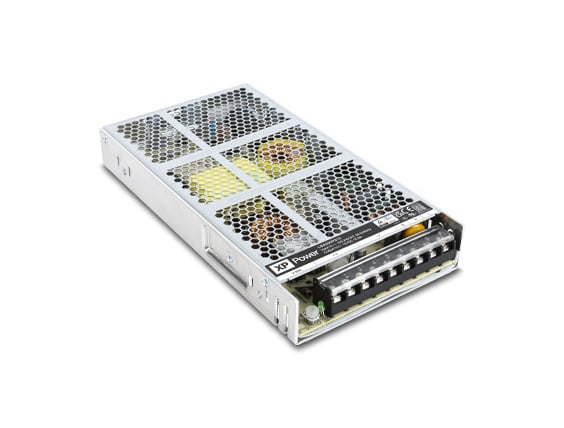
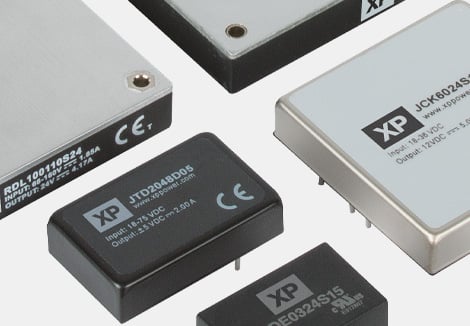





This article explores the transformative potential of industrial 3D additive manufacturing and highlights how robust, adaptable power systems enable these technologies to thrive in demanding manufacturing environments. A case study demonstrates how XP Power’s innovative power solutions addressed the unique challenges of advanced 3D printing applications.
Overview:
3D printing is revolutionizing design, prototyping, and production with unmatched precision and customization.
Advanced 3D printing relies on robust power systems to ensure reliability, precision, and scalability in demanding industrial environments.
A case study highlights how XP Power’s HPF3K0 supported one customer’s high volume 3D printing with precision and safety compliance.
Advantages of industrial 3D additive manufacturing
By enabling faster prototyping and on-demand production, 3D printing is redefining how industries approach product development. Unlike traditional methods that rely on subtractive processes—removing material from a larger block—3D printing builds objects layer by layer, reducing material waste and energy consumption. Manufacturers can iterate rapidly, bringing products to market faster while reducing costs and this flexibility is invaluable in industrial applications. Let’s look at some of the advantages additive manufacturing offers:
Enhanced design freedom
Engineers can create highly intricate geometries that are impossible or cost-prohibitive with traditional manufacturing methods. Complex parts, internal channels, and lightweight lattice structures are all achievable, pushing the boundaries of design innovation.
Reduced waste and costs
Additive manufacturing minimizes material usage, as it only deposits material where needed. This contrasts with traditional methods that generate significant waste during machining or fabrication. The reduced waste not only cuts costs but also supports sustainability goals.
Rapid prototyping and production
Manufacturers can produce functional prototypes within hours, accelerating the development cycle. This rapid turnaround allows teams to test designs quickly and make improvements without the delays associated with traditional tooling or machining.
Customization at scale
Industries like healthcare benefit from the ability to produce personalized products, such as prosthetics, implants, and dental devices, tailored to individual patient needs. This scalability enables manufacturers to deliver mass customization without sacrificing efficiency.
Simplified supply chains
On-demand manufacturing with 3D printing reduces the need for extensive inventories and complex supply chains. Products can be printed locally, reducing lead times and transportation costs.
Case study: high-volume 3D printing systems
Manufacturers face a significant challenge when creating new products: balancing time, cost, and material efficiency. Traditional methods are not only resource-intensive but often involve lengthy setup times.
One XP Power additive manufacturing customer is addressing these challenges with its cutting-edge 3D printing systems. These systems are designed to produce high-volume polymer parts, such as seals and gaskets, with consistent precision and reliability.
The challenge: meeting the complex power needs of advanced 3D printing
The customer’s printers are equipped with advanced closed-loop feedback control, ensuring that printed parts adhere precisely to their CAD designs. This capability reduces manual intervention and waste, but the system’s power requirements posed a unique challenge.
A power solution was needed for a new 3D printer that could:
Deliver a single-phase 220VAC input and 3000W output.
Integrate digital controls to monitor and interact with other systems.
Meet industrial safety standards for reliable operation in demanding environments.
Having worked with XP Power on previous designs, the customer approached us to help develop a power solution for their next-generation printer.
The solution: delivering a tailored power system for precision and efficiency
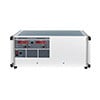
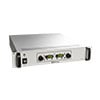
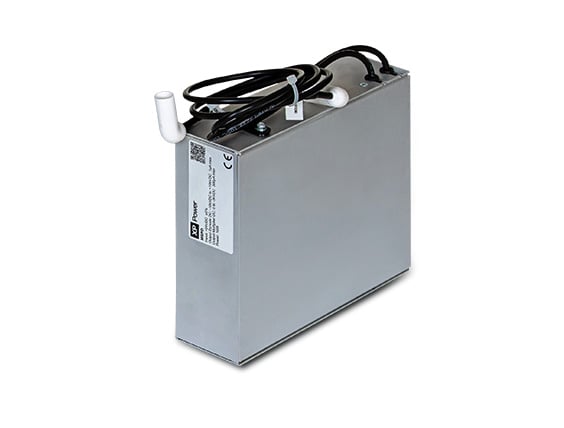
XP Power recommended its HPF3K0 series, a compact, high-performance power supply that met the customer’s specifications. The HPF3K0 offered:
Programmable digital controls: Enabled seamless integration with the 3D printing systems, improving user interaction and monitoring.
Compact design: Allowed for easier integration into the printer’s architecture while maintaining excellent performance.
Industrial safety approvals: Certified to EN62368 and UL62368 standards, ensuring compliance for industrial applications.
XP Power’s Application Team worked closely with the customer to fine-tune the integration, providing fast response times and tailored support to address technical challenges.
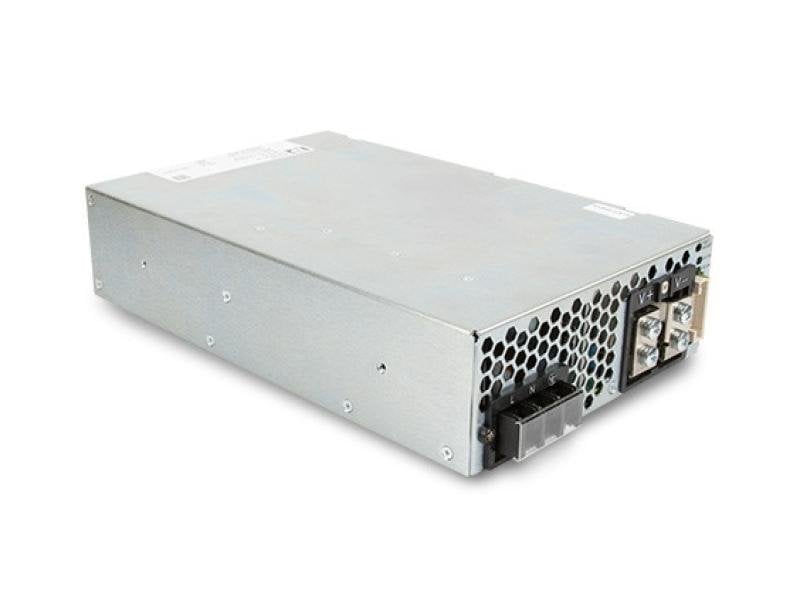
The HPF3KO Series
The outcome: powering innovation with performance and reliability
The HPF3K0 series exceeded expectations, delivering the flexibility, performance, and reliability required for the customer’s advanced 3D printing system. Key benefits included:
Reduced waste and increased production efficiency through precise power delivery.
Enhanced operator experience via digital controls.
Improved safety and compliance for industrial applications.
This collaboration underscored our commitment to supporting innovative technologies with robust and responsive power solutions.
Summary
Industrial 3D additive manufacturing is redefining what’s possible in manufacturing, offering unprecedented precision, efficiency, and customization. As technology evolves, reliable power systems are critical to ensuring consistent performance and scalability.
XP Power’s partnership with the additive manufacturing company profiled in the case study demonstrates how tailored power solutions can address the challenges of advanced 3D printing, paving the way for continued innovation in industrial manufacturing.
Discover the HPF3K0 series: versatile, programmable AC-DC power solutions designed for high-performance applications.

Shravan Govindaraj
Shravan Govindaraj is XP Power’s Senior Product Marketing Manager. He has over 8 years of experience in product marketing and technical scales across multiple industries including power supplies, electric motors and HVAC. Shravan joined XP Power in 2022 to develop and implement go-to-market strategies for all XP Power products.


