






Designing-in high voltage modules into applications that must run reliably for a long time is far from straightforward. However, to successfully build safe, accurate, and dependable high voltage systems, it’s important to understand what makes these designs tricky from the start.
This blog investigates the complexities that often surface for design engineers and identifies some high voltage solutions which overcome accuracy, stability, and integration hurdles.
Overview
How to define system requirements for high voltage modules
What to consider for accurate, stable, and safe high voltage operation
The key electrical and mechanical factors for seamless high voltage integration
High voltage module specification: the challenges
High voltage design-in presents numerous challenges across applications like analytical instrumentation, semiconductor manufacturing, and medical devices. These challenges often surface through field experience and discussions with design engineers. Some of the most common ones are outlined below:
Defining high voltage module requirements
Accuracy and stability of high voltage power converters
Designing circuitry around high voltage in the application
Ease of handling and integration in the end application
Now let’s look at what’s involved with each of them.
Defining high voltage module requirements
Defining your requirements is the first and most critical step in designing reliable high voltage systems.
Input and output conditions
Begin with a clear understanding of the available input voltage, its tolerance, and the expected loading characteristics. Applications often present mixed resistive and capacitive loads and voltage and current demands under various conditions must be carefully evaluated.
Voltage, current, and polarity
The module’s output should align with the application’s function; for example, powering a photomultiplier tube may require 1200 VDC at microampere levels.
Control and monitoring signals
Most modern systems use digital logic, so compatibility with control signals is essential for seamless integration.
Environmental conditions
You’ll need to consider operating temperature, humidity, and installation environment to ensure reliable performance.
Size constraints
Compact form factors are increasingly important across both small instruments and larger industrial systems.
Agency approvals
Regulatory compliance (e.g., UL/IEC/EN 61010 for lab equipment) must be addressed early to avoid costly redesigns.
Accuracy and stability of high voltage power converters
High voltage systems demand precision and repeatability, which can be affected by variations in input voltage, load, temperature, and aging. You should consider:
Output voltage tolerance: Keep deviations within acceptable limits.
Setpoint accuracy: Ensure the module can reliably achieve programmed voltage levels.
Line and load regulation: Critical for consistent performance under dynamic conditions.
Ripple and noise: Must be minimized to prevent interference with sensitive circuits.
Linearity of control: Predictable transfer functions simplify tuning and calibration.
Temperature coefficient: Evaluate how output drifts with temperature changes.
Stability over time: Long-term precision is vital in applications like mass spectrometry, where repeatable results are required over extended operation.
Designing the circuitry around high voltage
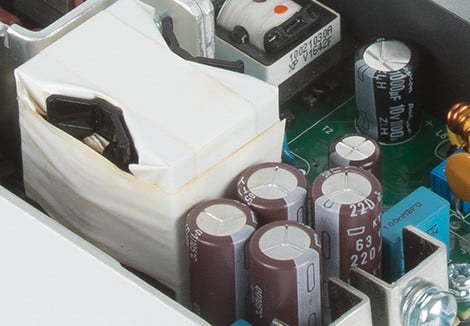
High voltage PCB design requires additional care beyond low voltage or digital designs. You should pay close attention to layout and component choices to ensure safety and long-term performance.
PCB layout considerations
Maintain proper creepage and clearance distances.
Avoid ground planes and sharp pad edges in HV regions.
Eliminate silk screens and plated holes near HV traces.
Use slots or conformal coatings where necessary.
Component considerations
Ensure appropriate voltage and power ratings.
Apply derating strategies.
Factor in voltage/temperature coefficients and thermal behavior.
Ease of handling and integration into the end application
Integration involves both electrical and mechanical aspects. The following factors simplify handling and reliability:
Protection and safety
Input protection: under/over-voltage safeguards, and control signal protection against misprogramming.
Output protection: arcing detection, overcurrent limits, and short-circuit protection.
Thermal protection: automatic shutdown with auto-recovery enhances reliability.
Control signals
Voltage programming
Enable/disable input
Output voltage and load current monitoring
Digital compatibility with DACs
Repeatability of performance
Physical module integration
Input/output connection flexibility
Space and size constraints
PCB or chassis mounting options
Environmental protection (dust, moisture, vibration)
Heatsinking and thermal path design
Alignment with overall system architecture for serviceability
Addressing design challenges with the right high voltage solution
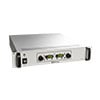
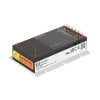
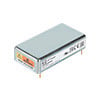
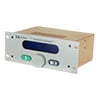
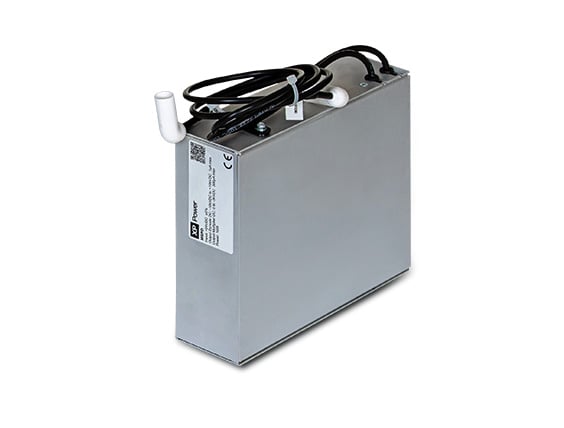
To address the critical challenges outlined above, our high voltage solutions are engineered for precision, reliability, and seamless integration. The HRC05 series and HRL30 series have a proven track record of providing optimal high voltage solution in a very compact, PCB mount package for semiconductor manufacturing equipment, medical devices and instrumentation.
They offer enhanced voltage accuracy, robust protection mechanisms, and compact form factors, making them particularly well-suited for modern high density applications.
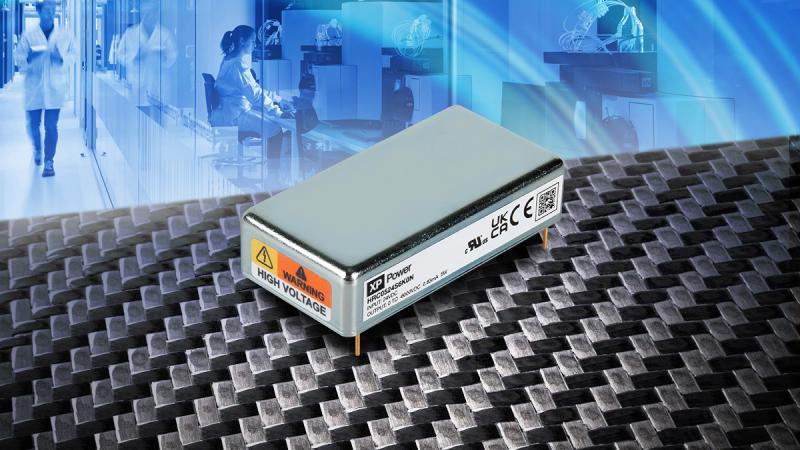
HRC05 Series
Summary
Selecting the right high voltage power supply requires balancing electrical and mechanical design considerations. By understanding potential pitfalls in advance and specifying requirements carefully, system designers can achieve safe, stable, and long-term high voltage performance.
Discover more about the HRC05 - precise, stable, low noise high voltage solutions.

Hafiz Khalid
Hafiz is XP Power’s VP of High Voltage Product & Business Development. He has worked in design, application, solution engineering, and product management roles for various products for the past 18 years. Previously, he was Senior Product Manager at XP Power and High Voltage designer with EMCO High Voltage which was acquired by XP Power in 2015.


