






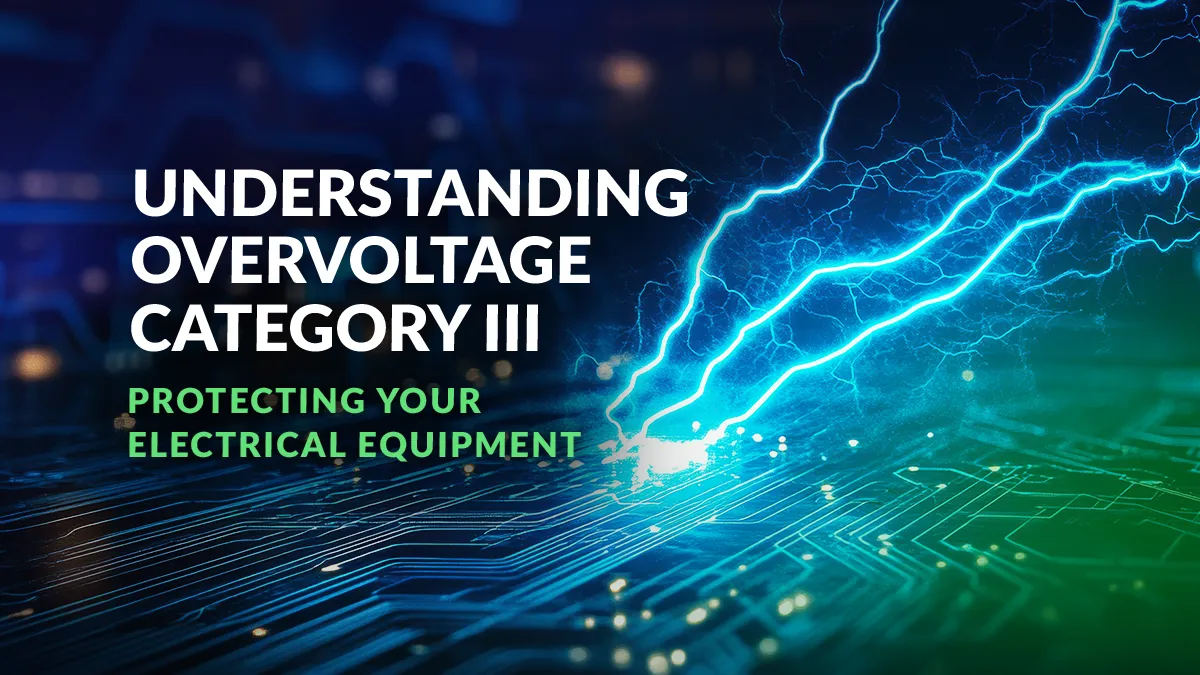
Have you ever come across Overvoltage Category III on a spec sheet or safety standard and wondered what it means and why it matters? In this blog, we’ll break down its definition, explain how overvoltages are classified, and show where this category appears in real-world applications.
What is Overvoltage Category III?
Overvoltage Category III (often abbreviated as OVC III) is a classification used in electrical safety standards – most notably IEC 61010 and IEC 60664 – to define the level of transient overvoltages that electrical equipment must withstand in a particular environment.
Simply put, overvoltage categories describe how close a piece of equipment is to the power source, and how exposed it is to voltage spikes, such as those caused by lightning strikes or switching surges.
OVC III represents equipment used in fixed installations, like those permanently connected to a building’s electrical infrastructure such as distribution panels, circuit breakers, and industrial machinery.
What are the four overvoltage categories?
Before diving deeper into Category III, here’s an outline of the four overvoltage categories defined by the IEC:
Overvoltage Category I (OVC I): For equipment connected to low energy circuits, like signal-level devices or protected electronics.
Overvoltage Category II (OVC II): For typical household appliances and plug-in devices (e.g., TVs, computers).
Overvoltage Category III (OVC III): For equipment in fixed installations, directly connected to the building’s wiring.
Overvoltage Category IV (OVC IV): For equipment at the origin of the electrical installation, like utility meters or main service panels.
These categories are hierarchical with each level tolerating greater transient overvoltages than the one below.
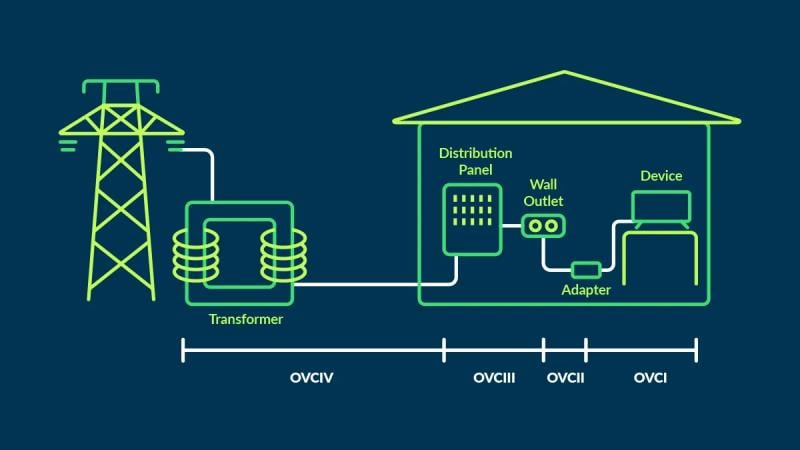
Diagram shows the OVC IV to OVC I environments.
What is the overvoltage protection rating for Measurement Category III?
When it comes to test and measurement equipment, standards like IEC 61010-1 classify devices into measurement categories based on their intended use environment.
Measurement Category III is essentially the same as Overvoltage Category III: it refers to instruments designed to measure or connect to circuits within fixed installations where high energy transients are possible.
For example, measuring voltage at a distribution panel or within industrial control systems would fall under Measurement Category III. Instruments rated for this must withstand higher surge voltages (often 6 kV or more) than those intended for lower categories.
Where does OCV III apply?
OVC III environments include distribution boards and circuit breakers; industrial control equipment; wiring in fixed installations; permanent power installations in commercial or industrial buildings; three-phase motors and drives; and equipment between the utility connection and point-of-use devices.
These areas are closer to the incoming power source and are therefore more exposed to voltage spikes from the grid or switching operations. That’s why equipment used here needs robust insulation and surge protection.
Why is overvoltage classification important?
Understanding overvoltage categories isn't just for compliance – it’s critical for safety and equipment longevity. If a device is not properly rated for its installation environment, a sudden overvoltage can damage internal components, cause safety hazards such as an electrical shock and result in costly downtime or data loss.
Choosing the right OVC rating ensures your equipment can withstand the real-world electrical conditions it will face.
How are overvoltages classified?
Overvoltages are typically classified by their amplitude and energy level, and their likelihood in a given environment. These factors determine the necessary insulation, creepage distances, and transient suppression required for a piece of equipment.
IEC standards define typical impulse voltages for each category and nominal system voltage. For example, for a 230V system:
OVC II devices: Must withstand 2.5 kV impulses
OVC III devices: Must withstand 4 kV impulses
OVC IV devices: Must withstand 6 kV impulse
These impulse levels are derived from years of empirical data and ensure a standard baseline for equipment resilience across different industries.
What’s the difference between OVC III and OVC II?
One common point of confusion is the difference between Overvoltage Category II and Category III. Here’s a simple way to think about it:
OVC II = Equipment connected after the final distribution point (e.g., wall outlets)
OVC III = Equipment connected before or at the distribution point (e.g., breakers, fixed industrial equipment)
If you’re designing or installing equipment in a commercial or industrial building, Category III is often the minimum rating required.
Summary
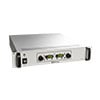
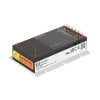
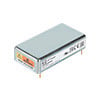
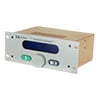
Whether you’re selecting components for an electrical panel or buying test gear for an industrial setting, Overvoltage Category III is a key safety consideration telling you how resilient the equipment is to real-world electrical surges.
Download Your Essential Guide to Power Supplies for clear, practical, technical insights to navigate power supply systems with confidence.

Shravan Govindaraj
Shravan Govindaraj is XP Power’s Senior Product Marketing Manager. He has over 8 years of experience in product marketing and technical scales across multiple industries including power supplies, electric motors and HVAC. Shravan joined XP Power in 2022 to develop and implement go-to-market strategies for all XP Power products.


