
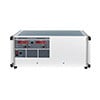
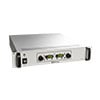






Integrating a high voltage power supply into demanding applications like ion implantation, e-beam welding and medical accelerators requires levels of very high voltage and exceptional power, accuracy, and reliability.
Hafiz Khalid explains that engineers need solutions that maximize power density, simplify integration, and ensure long-term stable operation.
Overview
Conventional high voltage supplies are often bulky, heavy, and hard to service
Analogue control loops complicate integration into modern digital systems
High power, high precision, and compact form factors are critical across multiple industries
Digital, air-insulated designs improve efficiency, reliability, and maintainability
Challenges with conventional high voltage design
The physical size and weight of traditional high voltage power supplies is a major challenge. In advanced semiconductor manufacturing and research environments, rack space is limited, and older supplies often occupy 6U-7U or more, restricting scalability and the addition of new process tools. Traditional insulation methods, such as potting or oil, further increase weight and reduce serviceability, making component failures costly and time-consuming to repair.
Integration and control difficulties
System integration also presents difficulties. Many conventional high voltage supplies rely on analogue topologies for critical control loops. Engineers must extract analogue signals, convert them using external ADCs, and feed them into digital controllers. This adds complexity, increases development time, and creates ongoing maintenance challenges.
High voltage needs across industries
Precise and controllable high-voltage power is essential in many fields. Ion implantation, which is a critical process step in semiconductor chip manufacturing, requires smaller size PSUs with reliability, repeatability and enhanced control and monitoring features. Medical and research accelerators, such as proton therapy systems and cyclotrons, require stable output to ensure functionality and effective treatments, and they must integrate with existing control systems using robust communication protocols like CAN or EtherCAT. Advanced industrial processes, including e-beam welding and additive manufacturing, demand consistent high voltage and power to ensure product quality and protect sensitive equipment. Digital feedback and protection are critical to maintaining operational reliability and repeatability.
The WBQ Series: A digital high voltage platform
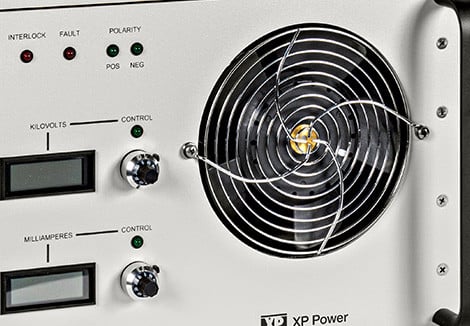
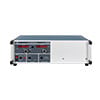
The XP Power WBQ series addresses these challenges by combining high power density with a fully digital control architecture. It delivers output voltages up to 100 kV and output power up to 10 kW in a compact 3U, 19-inch rack format, significantly reducing footprint compared to conventional high-voltage supplies. Multiple WBQ units can operate in parallel to scale total output up to 100 kW in a single rack, supporting high-power applications such as medical cyclotrons and industrial multi-gun e-beam welding systems.
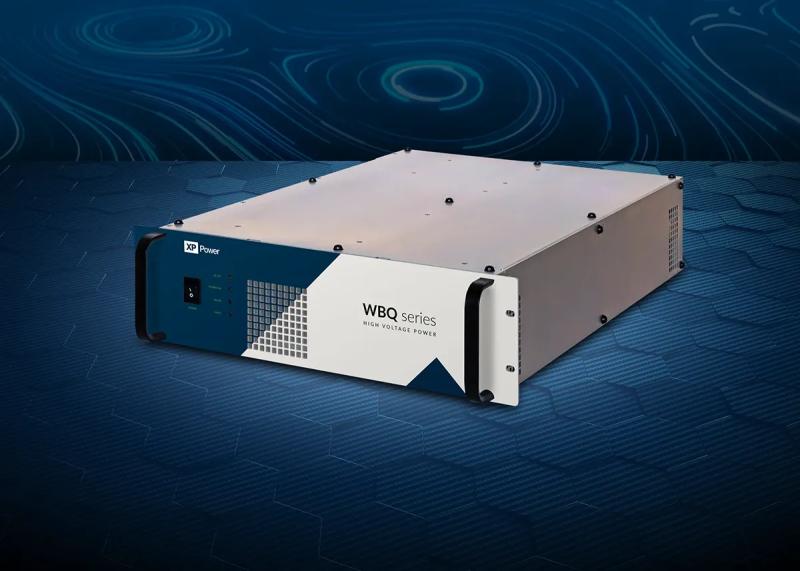
The WBQ series
Compact size and high efficiency
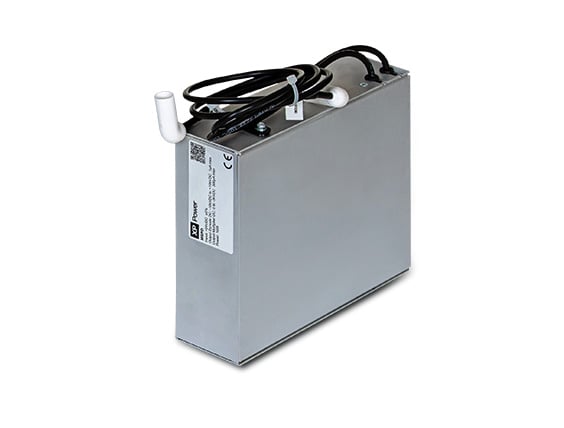
The compact size is achieved using silicon carbide (SiC) MOSFETs in the power stage, allowing over 90% efficiency. The units use air insulation rather than potting or oil, reducing weight and improving serviceability. Unlike potted units, air-insulated designs enable easier troubleshooting, maintenance, and potential repair, which enhances uptime and lowers long-term maintenance costs.
Fully digital control and monitoring
At the core of the WBQ platform is a fully digital architecture based on a digital signal processor (DSP) that monitors and controls critical functionality. This replaces traditional analogue control loops, allowing engineers to configure output voltage and current in real time via an intuitive user interface.
The system provides advanced diagnostics, event logging, and black-box reporting, capturing the state of the supply immediately before a fault to accelerate troubleshooting. Integrated digital and analogue interfaces—including CAN, USB, and optionally EtherCAT—allow seamless integration into modern automation systems, while firmware updates can be applied in the field to maintain flexibility for evolving applications.
Summary
In applications such as ion implantation, medical accelerators and e-beam welding, the WBQ series delivers precise, reliable, and scalable high voltage power. Its digital control ensures stable output for sensitive processes, while its compact, high power design maximizes valuable space in racks and cleanrooms. Air-insulated construction and advanced diagnostics simplify maintenance and improve uptime.
By addressing the challenges of power density, system integration, and long-term reliability, the WBQ platform establishes a new standard for high voltage solutions across industry, research, and medicine.
Discover the future of smart high voltage power delivery - the WBQ Series. Fully digital, rack-mounted, up to 10kW into an ultra-compact 3U form factor.

Hafiz Khalid
Hafiz is XP Power’s VP of High Voltage Product & Business Development. He has worked in design, application, solution engineering, and product management roles for various products for the past 18 years. Previously, he was Senior Product Manager at XP Power and High Voltage designer with EMCO High Voltage which was acquired by XP Power in 2015.


