







Digital power has experienced rapid growth over the last decade by taking advantage of the many benefits that digital control brings to a traditionally analog domain. The adoption of digital control has been supported by many new products from microcontroller vendors which specifically target the digital power market.
Overview
Digital control in power designs is expanding due to advancements in microcontrollers that provide more precision than traditional analog systems.
Digital power improves reliability and efficiency, with customizable firmware suitable for complex, adaptable applications.
Shifting to digital power is complex, but reduced components and firmware reusability make it cost effective and scalable long-term.
Traditional analog power supply design
In a traditional analog power supply, control is implemented using a control IC consisting of operational amplifiers and comparators combined with a series of carefully selected external capacitors and resistors to form the compensation network. This compensation network is designed to give the power supply the desired regulation, transient load performance and stability in the frequency or s-domain. The compensation network is fixed and often compromised by the presence of the bandwidth limiting optocoupler in the feedback loop. This is shown below in Figure 1.
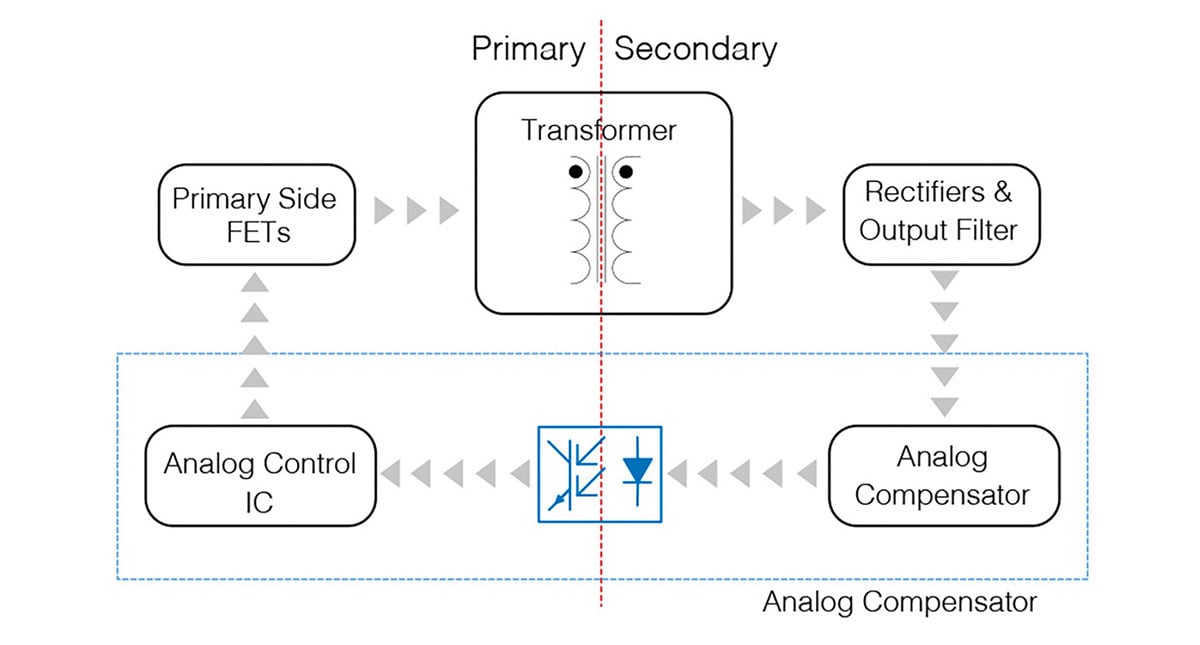
Figure 1: An analog controlled power supply
Transition to digital control
Digital power means a digital control loop which regulates and stabilizes the power supply replacing the analog control ICs which have traditionally been used in switch mode power supplies. In the digital power supply shown below in Figure 2, the analog control IC and its associated analog compensation network have been replaced by the microcontroller.
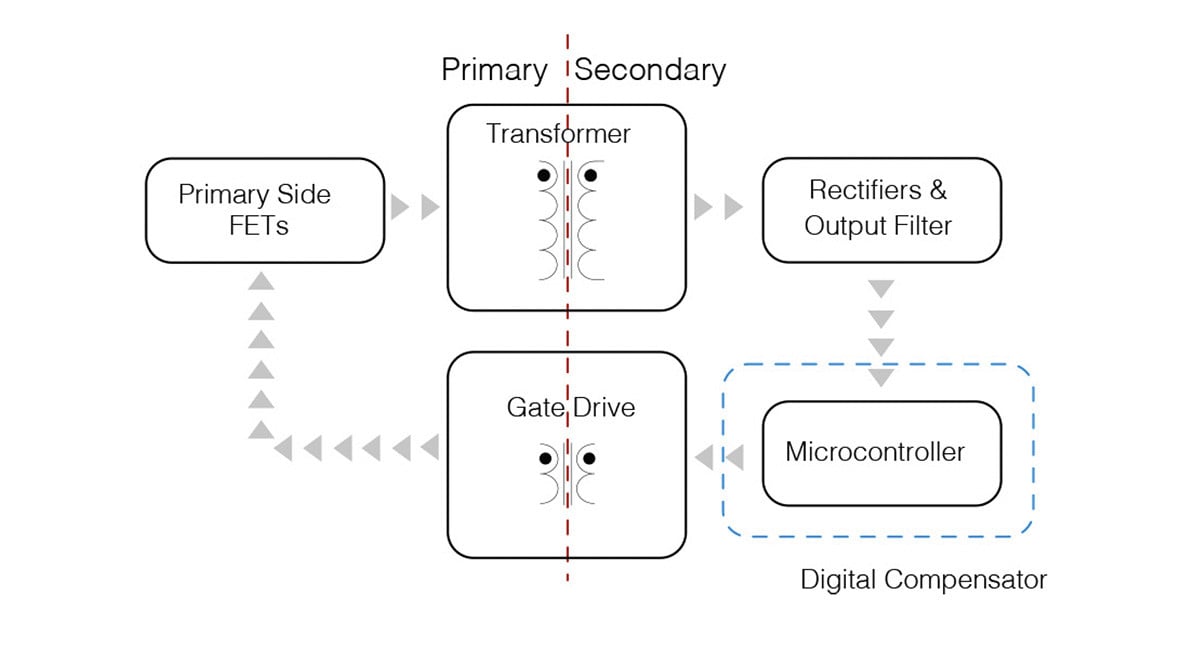
Figure 2. A digital controlled power supply
Digital control in power supplies: how it works
The microcontroller is used to close the feedback loop of the power supply. In a typical digitally controlled power supply, an Analog-to-Digital Converter (ADC) module on-board the microcontroller samples the output voltage or current which is compared to a demand reference value with the result being an error term. The error term is used as the input to the discrete time controller. The discrete time controller is executed at exact, pre-defined, intervals each time there is a new ADC sample available.
Frequency response and stability in digital control
Just like the analog compensators in the s-domain, the discrete time controller has a frequency response in the time or z-domain. The controller coefficients determine the frequency response and stability of the power supply and must be analytically calculated to stabilize the power supply.
Microcontrollers in power supplies: historical context
Microcontrollers have been used in the power supply field for many years for the purposes of implementing basic functionality such as serial interfaces and fan speed control, using relatively simple and low-cost microcontrollers
While full digital control was initially more common in the server and telecom markets, its adoption in industrial and medical markets has steadily grown. With advancements like AI and Industry 4.0 driving demand for greater efficiency, precision, and connectivity, the integration of full digital control in industrial and medical power supplies is set to accelerate significantly.
Cost and complexity barriers in digital power design
The predominant prohibiting factor to the switch to digital control has been the combination of the cost and complexity associated with digital power. The cost of a modern microcontroller with the DSP functionality needed to implement full digital control has decreased dramatically in recent years but the complexity remains an issue, stemming from the need for a mixed domain approach to designing the power supply, where engineers must combine their power supply design skills with the ability to write efficient code and stabilize the discrete time control loop.
Firmware development and reusability
The development of robust and efficient firmware for a power supply can take a significant amount of time depending on the complexity of the design. The verification, testing and documentation required for various safety approvals results in substantial resources being required to develop a robust and reliable digital power supply.
Of course, once the initial investment has been made, one of the benefits of digital power is the ability to reuse firmware across many different products, the change in firmware for products with different output voltages within one series may be a simple case of changing the controller coefficients.
Advantages of digital control over analog
The digital control loop has many advantages over its analog counterpart. It is insensitive to the environment, temperature, ageing and tolerances of the control loop components. It allows the system to monitor the performance of the power supply in real time and adjust parameters to tune the performance as required.
High performance control for faster transient recovery
Furthermore, advanced discrete time control techniques allow us to achieve higher performance compared to analog compensators, recovering from transients in a matter of a few switching periods, which is of particular interest in the Point Of Load (POL) converter market which was an early adopter of digital power.
Digital power increases efficiency in power converters
The ever-increasing demand for high efficiency power converters is a key area where digital power offers solutions beyond the capability of typical analog control schemes. This may involve adjusting the operation of the PSU to achieve optimal zero voltage or zero current switching – reducing losses and increasing efficiency.
High speed digital control loop execution
The latest microcontrollers for digital power applications contain DSP functionality that allows the digital control loop to execute within a fraction of a single PWM switching period, every switching period.
Figure 3 below shows the PWM switching period of a typical digital power supply. In this simple example, the output voltage is sampled once per switching cycle. An ADC conversion time of a few hundred nanoseconds is typical for a microcontroller designed for digital power applications. Following the ADC conversion, the interrupt service routine is called to execute the discrete time controller. This is a time critical routine.
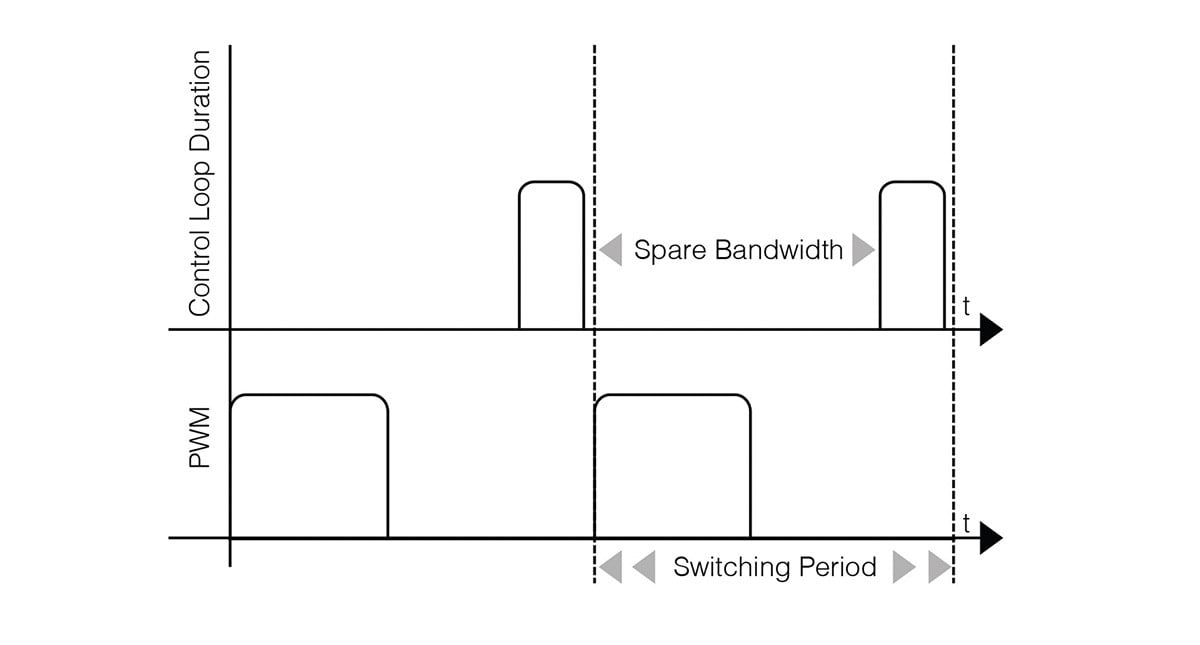
Figure 3- Typical control loop duration vs PWM switching period
Utilizing spare bandwidth in digital power systems
As shown in Figure 3, for this example, the time that the MCU does not spend executing the controller is spare bandwidth. This spare bandwidth can be used to perform other tasks or functions specific to an application. Any low priority tasks are run in a slow loop and will be interrupted whenever the high priority tasks occur, such as the ADC interrupt to run the control loop code.
Custom power applications enabled by digital control
Given the flexibility that a microcontroller adds to the design, digital power lends itself well to custom or modified standard power applications where the standard product may not satisfy every aspect of the customer’s requirements. There may be specific communication requirements such as controlling the power supply over USB, I2C or EtherCAT. The customer may require the output voltage or current limits to be adjusted or require real time monitoring, power rail sequencing or accurate current share between output modules. Application specific requirements that may have traditionally required hardware changes can often be implemented in firmware.
Cost effectiveness of digital power solutions
The high performance microcontroller used for digital power will certainly be costlier than the analog IC it replaces. However, the digital controller opens the opportunity to implement other functionality within the MCU rather than using discrete components. This can lead to a reduced component count and more compact solutions, especially for designs with complex signal requirements or multiple power rails which could be controlled using one microcontroller.
The result may be an overall solution that is more cost effective. Of course, for some complex requirements, going digital may be the only realistic solution.
Summary
With an MCU at the heart of the power supply, the possibilities for application-specific power solutions are far reaching. Given the many benefits that digital power offers, we are certain to see an ever-increasing presence of digital power over the coming years.
XP Power has the knowledge and capability to implement complex power solutions using the diversity of our standard product range and custom solutions so get in touch with our engineering team to discuss how we can help you.
Discover more about our leading range of digital, programmable power supplies.

Shravan Govindaraj
Shravan Govindaraj is XP Power’s Senior Product Marketing Manager. He has over 8 years of experience in product marketing and technical scales across multiple industries including power supplies, electric motors and HVAC. Shravan joined XP Power in 2022 to develop and implement go-to-market strategies for all XP Power products.


